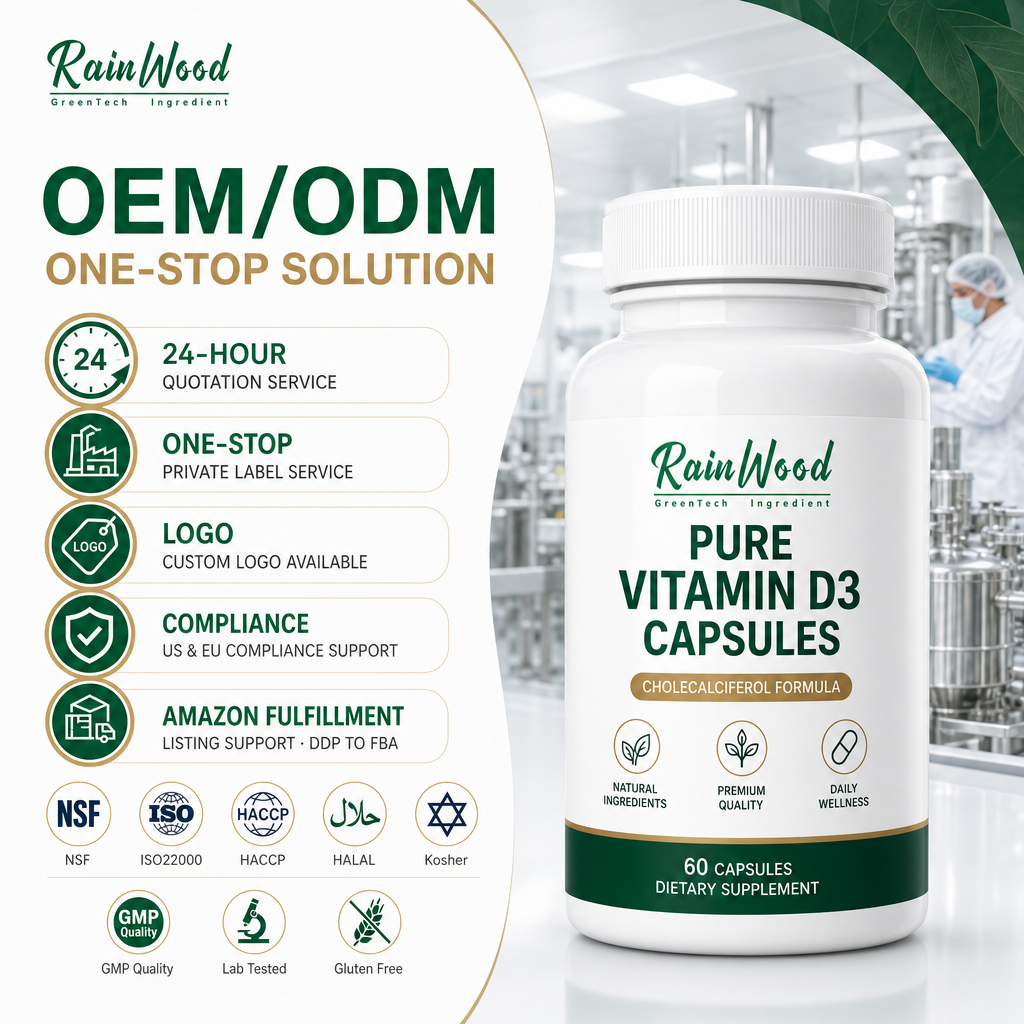
GMP Pure Vitamin D3 Cholecalciferol Hard Capsules 60 Count OEM Custom Private Label Dietary Supplement Box
Standard: 5000 IU / 2000 IU | Clean HPMC Shell
Engineered to align with strict EU Pharmacopoeia (Ph. Eur.) specifications and Federal Office of Consumer Protection and Food Safety (BVL) benchmarks for German B2B enterprises.
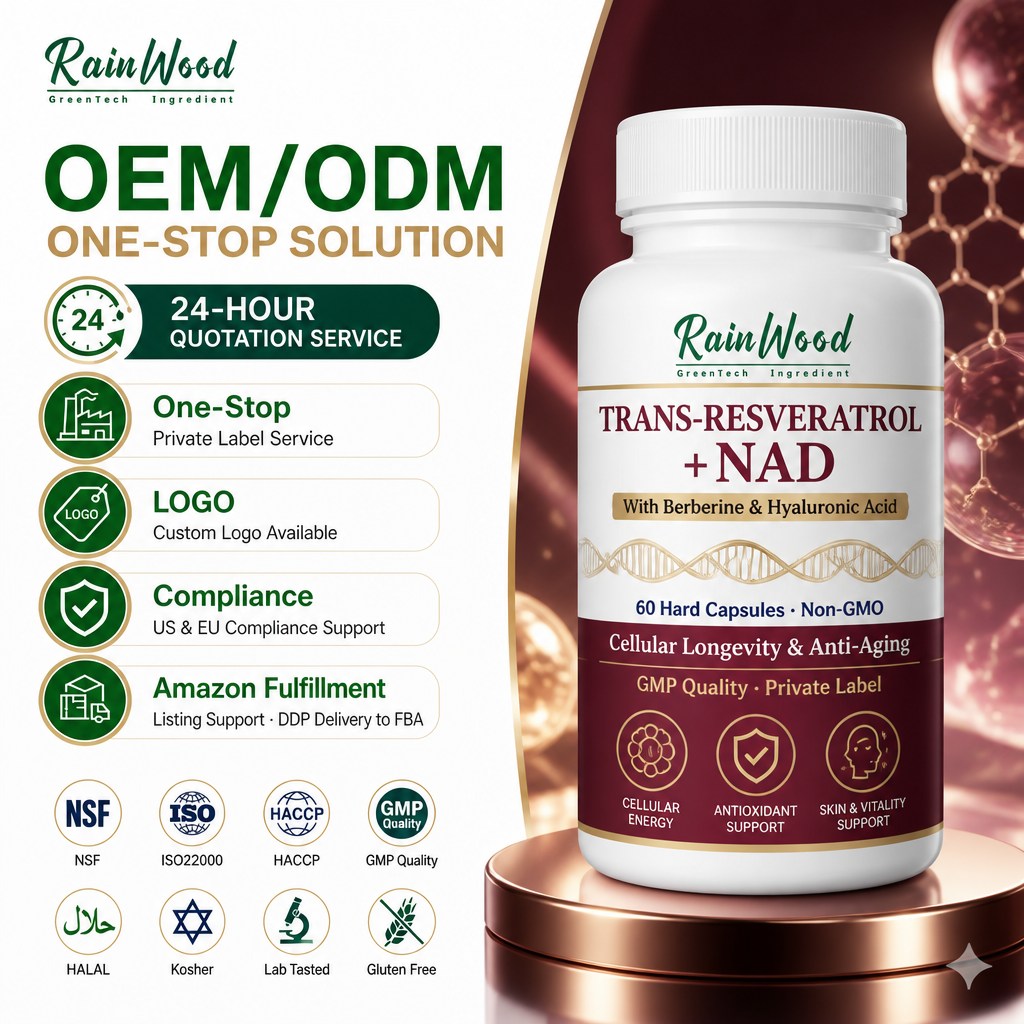
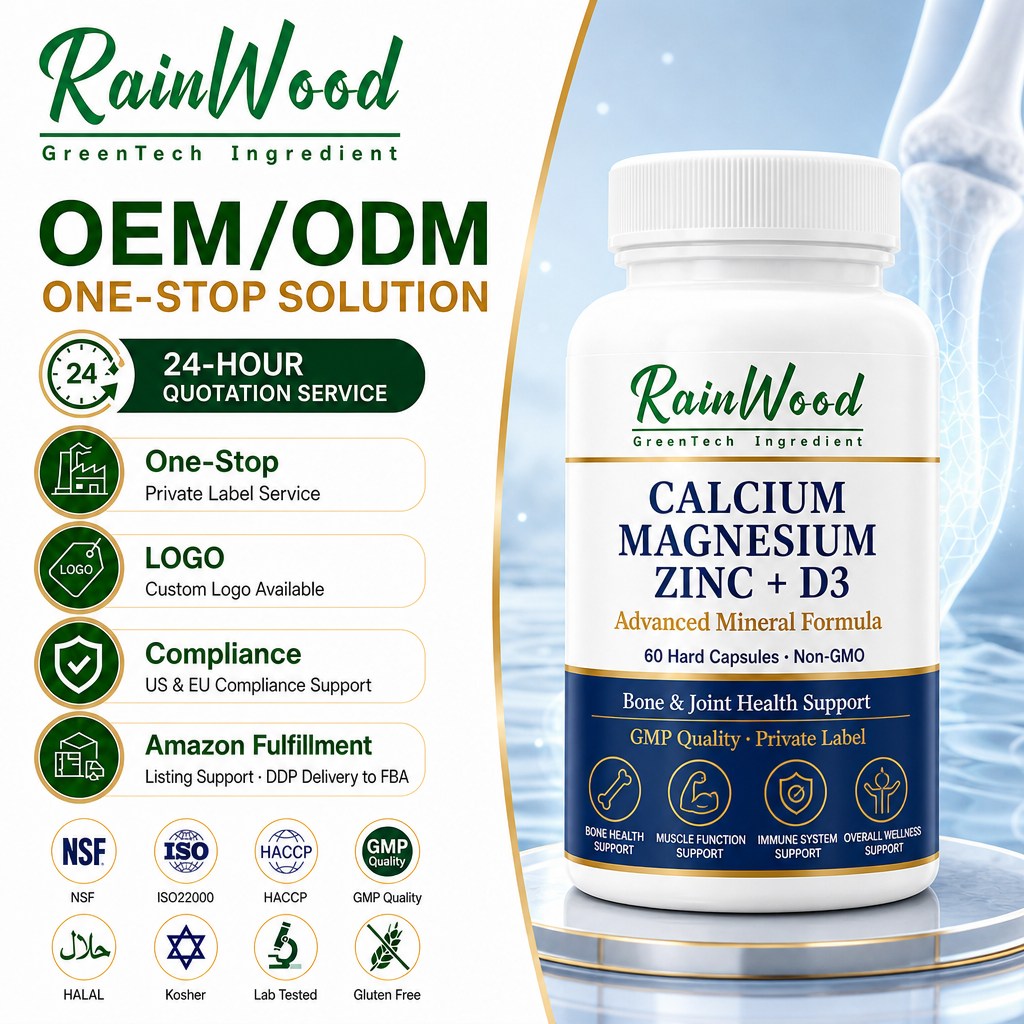
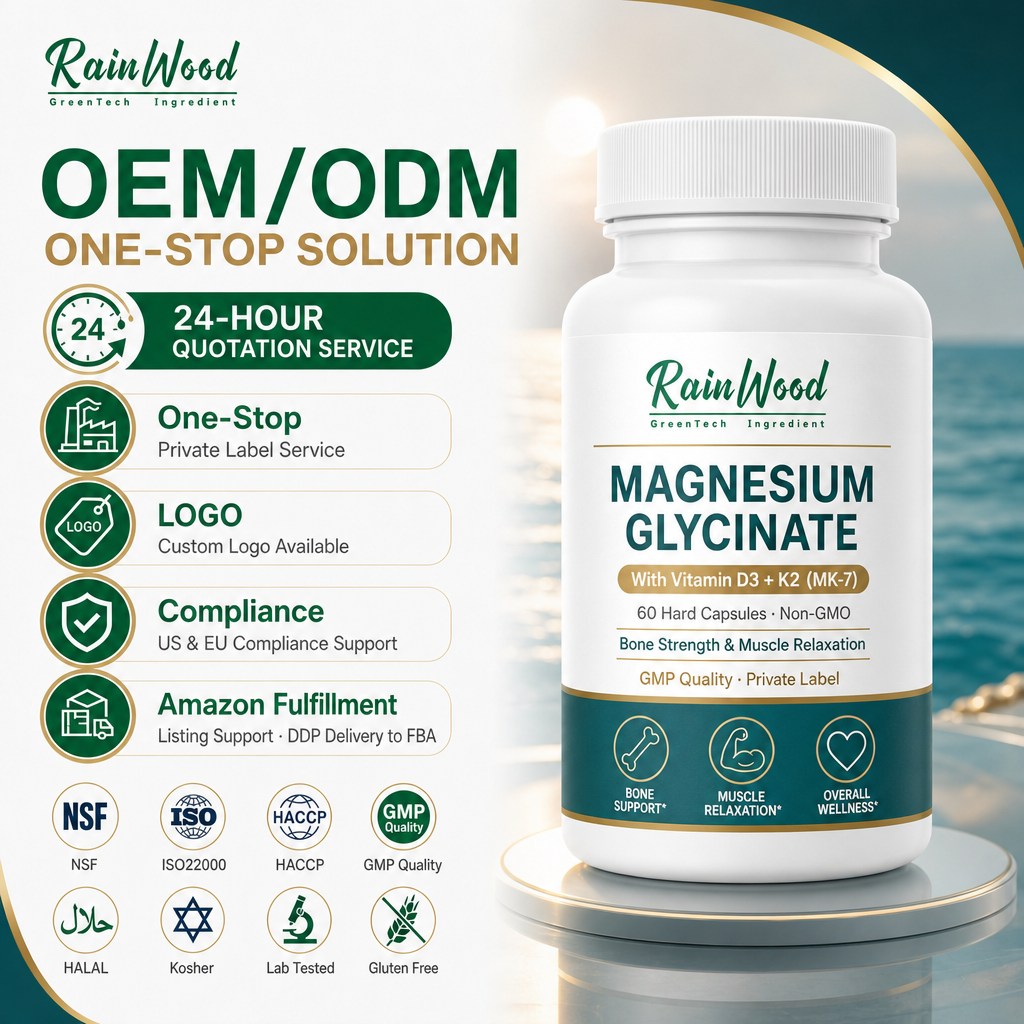
The Free and Hanseatic City of Hamburg represents far more than an economic engine for Northern Germany; it is the fundamental logistics conduit for certified raw botanical extracts entering the European Union. Through the Port of Hamburg (Hafen Hamburg) and the ultra-modern temperature-regulated handling terminals across the Waltershof and Altenwerder logistics zones, Hamburg connects Asian botanical cultivation corridors directly with German, Swiss, and Austrian contract manufacturing (CDMO) facilities.
In accordance with Regulation (EC) No 178/2002 and Regulation (EC) No 852/2004, importing highly refined flavonoid extract fractions—including monomeric flavan-3-ols, quercetin, hesperidin, luteolin, and trans-resveratrol—demands an unyielding standard of documented compliance. The Hamburg market exercises strict analytical gatekeeping, enforced through border veterinary and phytosanitary controls (Grenzkontrollstelle Hamburg Hafen). Shaanxi ESNO Biotech has integrated end-to-end trace documentation, ensuring our shipping manifests, Tamper-Evident drum containers, and air-tight moisture barriers meet the exacting demands of Hamburg-based pharmaceutical and nutraceutical consolidators.
| Analytical Parameter | ESNO Export Specification | German BVL / Ph. Eur. Requirement | Regulatory Verification Method |
|---|---|---|---|
| Flavonoid Assays (Total Polyphenols) | ≥ 98.0% Active Content | Documented Identity & Potency Claim | Validated RP-HPLC & UV-Vis (Ph. Eur. 2.2.29) |
| Heavy Metals (Pb, Cd, Hg, As) | Pb < 0.5 ppm, Cd < 0.1 ppm, Hg < 0.05 ppm | Regulation (EC) No 1881/2006 limits | Inductively Coupled Plasma Mass Spectrometry (ICP-MS) |
| Pesticide Residue Limits | Zero Detection (Undetectable < 0.01 mg/kg) | EU Regulation (EC) No 396/2005 Compliant | Multi-Residue LC-MS/MS & GC-MS/MS Screens |
| Polycyclic Aromatic Hydrocarbons (PAH4) | Benzo[a]pyrene < 2.0 μg/kg, Sum < 10.0 μg/kg | Commission Regulation (EU) 2015/1933 | Gas Chromatography Mass Spectrometry (GC-MS) |
| Ethylene Oxide (ETO) & 2-Chloroethanol | Not Detected (< 0.01 mg/kg) | Absolute Prohibition in EU Botanical Chains | Validated Headspace Gas Chromatography (GC-MS) |
Targeted integration modes tailored to German consumer expectations for high-purity, bioavailable functional formats.
Within the Hamburg functional food and apothecary (Apotheke) corridors, citrus flavonoids, rutin, and quercetin are increasingly combined with magnesium and vitamin complexes to create arterial integrity formulations.
Leveraging trans-resveratrol and polymethoxyflavones to activate sirtuin pathways and support mitochondrial restoration, serving Hamburg’s expanding demographic of longevity consumers.
Supplying water-dispersible flavonoid extracts to cosmetic contract formulators along the Elbe innovation corridor, targeting skin photodamage repair and extracellular collagen stabilization.
Key regulatory evolutions and scientific trajectories dictating procurement decisions among German QA and brand directors.
German brand owners are systematically rejecting generic polyphenol declarations in favor of HPLC chromatographic fingerprinting. Buyers now require raw material suppliers to demonstrate precise ratios of active monomers, eliminating adulteration risks from unrefined bulk botanical matrices.
Hamburg-based wholesale aggregators are transitioning from multi-tiered trading brokers toward verified manufacturing partners with direct extraction assets. Complete auditability from Shaanxi farm-gate biomass to packaged extract is now essential for long-term contract execution.
Because hydrophobic flavonoids typically exhibit low native intestinal absorption, the DACH market is heavily investing in liposomal, cyclodextrin-complexed, and microencapsulated delivery vehicles that provide verifiable pharmacokinetic superiority.
Operational integrity certified by NSF 455-2 GMP, ISO 22000, and HACCP standards, verified on-site by TÜV Rheinland.
Every commercial consignment bound for Hamburg includes a comprehensive Certificate of Analysis (COA) containing validated quantitative assays, loss-on-drying, particle fineness (mesh analysis), and complete microbiological counts (absence of Salmonella, E. coli, and Staph).
We empower brands to bridge raw active flavonoids into retail-ready shelf units. Whether you require plant-based HPMC capsules, effervescent mineral tabs, precision stick packs, or functional pectin gummies, our facility delivers end-to-end realization.
By leveraging dedicated freight lanes connecting Xi'an dry ports and Shanghai maritime terminals directly to Hamburg Altenwerder (CTA), we mitigate moisture degradation and transshipment bottlenecks, providing predictable Lead Times.
Addressing critical compliance, documentation, and quality validation questions common among German QA auditors and sourcing executives.
We use low-temperature indirect steam heating extraction and specialized food-grade adsorption resin purification columns. We strictly avoid open-fire direct air drying, which is the root cause of hydrocarbon contamination. Every batch exported to the European Union is certified below 10 μg/kg for the sum of four PAHs (Benzo[a]pyrene, Chrysene, Benzo[a]anthracene, and Benzo[b]fluoranthene) as enforced under Commission Regulation (EU) 2015/1933.
Yes. In compliance with strict German food safety regulations, we strictly prohibit the use of ethylene oxide sterilization across all raw botanical stages, manufacturing machinery, and storage areas. We use validated steam sterilization and automated irradiation protocols (upon request) to maintain bio-burden control while guaranteeing non-detectable levels of ETO and 2-chloroethanol down to < 0.01 mg/kg.
Our technical regulatory team assists German importers in assessing whether their target flavonoid active or delivery complex falls under the EU Novel Food Catalogue or possesses a documented history of consumption within the EU prior to 15 May 1997. We supply botanical origin certificates, solvent verification declarations, and non-novel extraction process proofs to streamline your local notifications with BVL.
For bulk standardized flavonoid extracts in 25 kg fiber drums, our MOQ starts at 25 kg to 100 kg. For customized finished dosage forms (hard capsules, blister packs, branded retail bottles), typical MOQs start at 500 to 1,000 retail units for stock formulas, or 2,000+ units for bespoke customer formulations. Lead times are 10–14 business days for production sampling and batch release, followed by 28–32 days maritime transit to Port of Hamburg, or 5–7 days via expedited air freight to Hamburg Airport (HAM).
Every delivery includes a lot-specific Certificate of Analysis (COA), formal Certificate of Origin (CO), detailed Manufacturing Process Flowchart, Non-ETO Statement, Allergen Declaration (Regulation EU 1169/2011), GMO-Free Certification, and Phytosanitary Certificates issued by national inspection authorities to ensure smooth customs clearance through Hamburg's specialized checkpoints.
Yes. Through automated cryogenic air-jet milling, we calibrate our botanical powders to meet specific mesh specifications, ranging from standard 80 mesh up to ultra-fine 200–300 mesh. This allows German CDMOs and packaging facilities to achieve uniform tablet hardness, prevent segregating blends in hard-capsule filling, and ensure instant dispersibility in single-serve stick packs.